
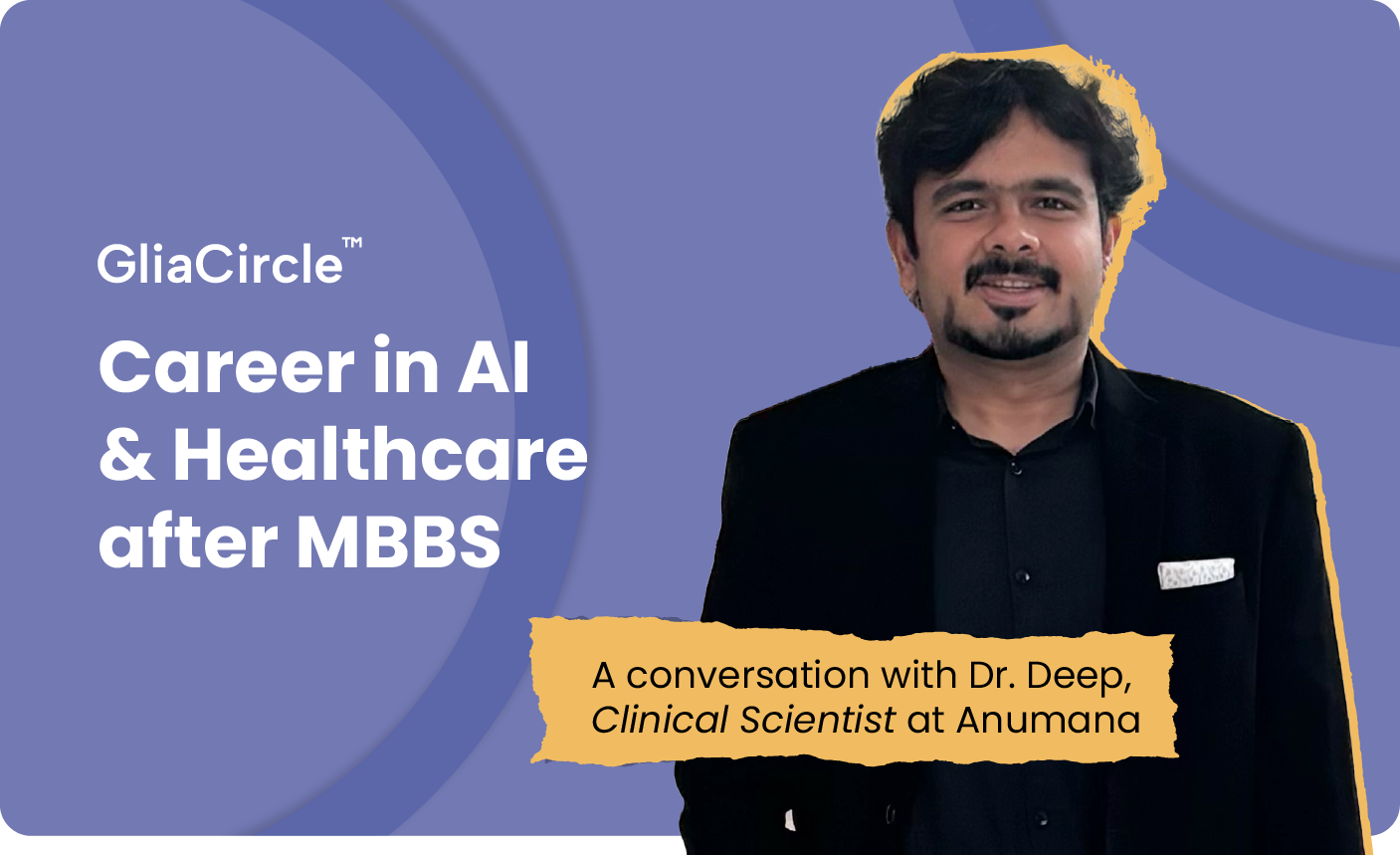
In this conversation, Dr. Deep reflects on his training years, the exposures that influenced his decisions, and how those experiences shaped his current work in the healthcare AI space.
Could you brief about your clinical journey?
I come from a family with no medical background. I completed MBBS and then worked as a non-academic junior resident in orthopaedics and trauma surgery for almost two years. During that time, I also prepared for USMLE and cleared Step 1.
I realised the chances of securing a surgical residency in the US were uncertain and financially high-risk. I then explored Germany, where orthopaedic training was a strong option, and began preparing for the medical licensing pathway there.
At what point did the shift away from clinical training begin?
I’ve always had an interest in management. My family runs a business, so the environment was familiar. While I was preparing for licensing in Germany, I came across the MPM-Cx program. I didn’t join it with the intention of switching careers. But the exposure during the course changed things.
“During the program, we had hands-on sessions and conversations with surgeons who were managing hospital chains and taking on administrative responsibilities. That solidified my decision to explore non-clinical options.”
What prompted you to move toward the medical technology space specifically?
Before MBBS, I was very comfortable with programming languages such as Java and C. I had always been drawn to biomedical engineering. During the course, that interest came back clearly.
How do you compare the MPM-Cx course experience with a traditional MBA?
A professor once told us that one year of an MBA is mostly networking.
“If you can network on your own, MPM-Cx is a good choice. It gives you the freedom to build your own path, but you have to take initiative. Nothing is spoon-fed.”
How did you secure your first corporate role after the course?
After completing MPM-Cx, I returned home and briefly practised as a part-time general physician while focusing on strengthening my LinkedIn profile and professional outreach.
I then joined Anumana, a medical technology company working on AI-based ECG interpretation and disease detection, as an intern, where I:
- Managed a disease algorithm portfolio
- Interacted with pharmaceutical partners
- Coordinated cross-functional teams
How did you move from a management role toward a more technical role?
About five months into my role at Anumana, I enrolled in the IISc Advanced Certificate in AI for Digital Health and Imaging. That helped me transition internally from management-focused responsibilities to more technical and scientific work on the algorithms. This helped me widen my role, incorporating management with even deeper scientific and technical work on the algorithms.
The idea was to keep both sides, management and data science, active. I want to eventually move into product management, where both skill sets are required.
What advice would you give to MBBS students who are unsure about their career direction?
Get exposure to something outside the hospital. Just see what exists.
“Medical training builds a cocoon around us. You won’t know what fits you unless you step out once.”
Editor’s Note:
Dr. Deep’s career highlights the value of treating exploration as a core part of professional development. It is similar to working with a versatile multi-tool rather than relying on a single, fixed instrument; this adaptability allows one to shift effectively when the demands of healthcare technology and corporate environments evolve.
Leave a Reply